Gangtok – A Complete Guide: Weather, MG Marg, Tourist Places & Distances
Introduction: Why Gangtok Belongs on Every Himalayan Itinerary
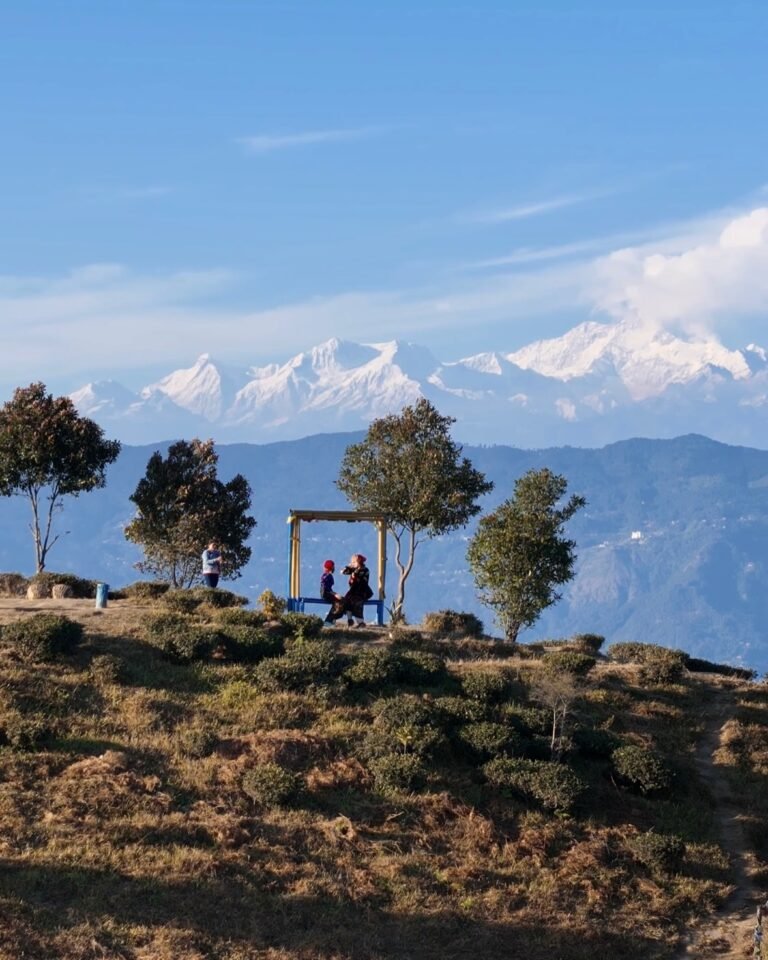
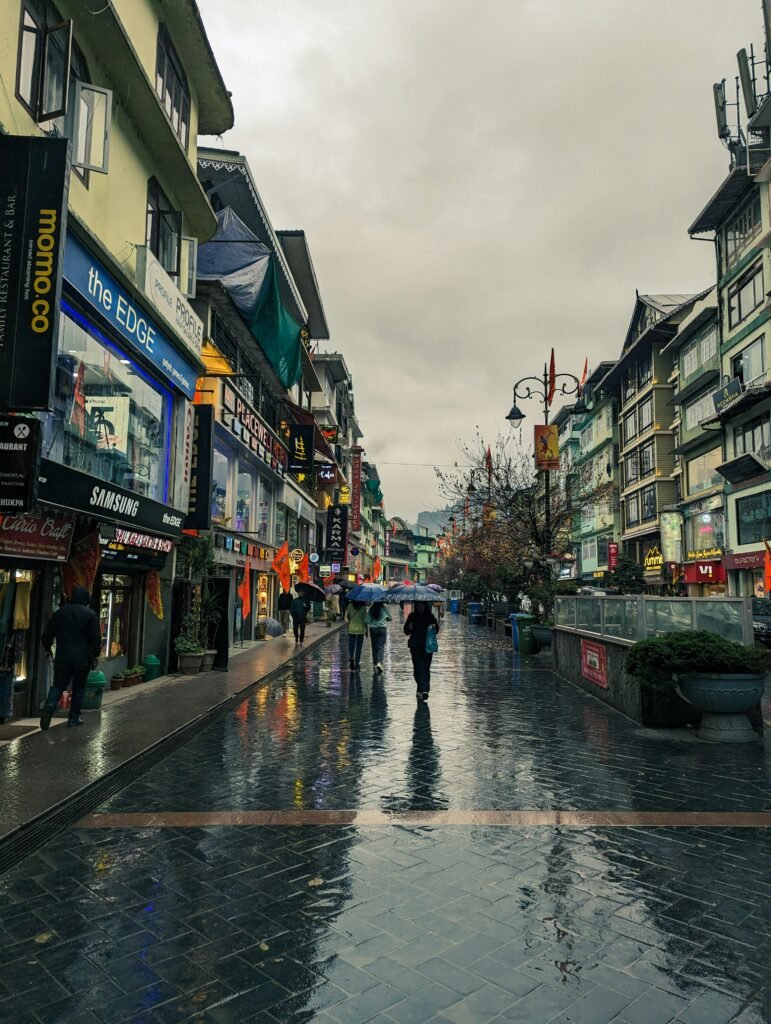
Perched on a ridge at around 1,650 metres (about 5,400 feet) above sea level, Gangtok is the capital of Sikkim and one of the most polished, walkable and welcoming hill towns in India. On a clear morning, the snow peaks of Kanchenjunga, the third-highest mountain in the world, glow gold above the town. By evening, the lights of the ridge spill down the slopes, and the crowds drift towards the pedestrian promenade of MG Marg.
Gangtok is clean, orderly and surprisingly easy to explore. Monasteries, waterfalls, viewpoints, cable cars and high-altitude lakes are all within a day’s drive. It is also one of the most convenient extensions to a Darjeeling Hills holiday, which is why so many readers of DarjeelingTrip.com ask us how to combine the two.
This complete guide covers everything you need to plan the trip:
- Gangtok weather and temperature through the year
- The best time to visit
- MG Marg Gangtok: what to do and eat
- The best Gangtok tourist places, local and day-trip
- Distances: Siliguri to Gangtok, Bagdogra to Gangtok, NJP to Gangtok, New Jalpaiguri to Gangtok and Darjeeling to Gangtok
- How to reach, where to stay, permits and practical tips
Gangtok at a Glance
| Detail | Information |
|---|---|
| State | Sikkim, India |
| Altitude | Approx. 1,650 m (5,410 ft) |
| Known for | Kanchenjunga views, monasteries, MG Marg, gateway to Nathula and Tsomgo Lake |
| Languages | Nepali, Sikkimese (Bhutia), Lepcha, Hindi, English |
| Nearest airport | Bagdogra (West Bengal) and Pakyong (Sikkim) |
| Nearest major railhead | New Jalpaiguri (NJP) / Siliguri |
| Best time to visit | March to May and October to mid-December |
Gangtok Weather: What to Expect Through the Year
Because of its altitude, Gangtok weather is cool and pleasant for most of the year. Weather in the hills changes quickly, though. A sunny morning can turn misty and wet by the afternoon, so check the forecast just before you travel.
Summer (March to May)
Summer is mild and one of the most popular seasons. Days are comfortable, skies are often clear, and rhododendrons and orchids bloom across the hills. This is an excellent time for sightseeing and for a trip towards Tsomgo Lake.
Monsoon (June to September)
Gangtok gets heavy rainfall during the monsoon. The hills turn lush and green and waterfalls swell, but landslides and road blockages on the approach roads are a real possibility. Views are frequently hidden by cloud. Travel is possible, but keep your plans flexible.
Autumn (October to November)
Many travellers consider this the best season. The air is crisp, the skies are mostly clear, and Kanchenjunga is at its sharpest. Festivals add colour to the town.
Winter (December to February)
Winter is cold and dry, with cool days and chilly nights. Higher areas such as Tsomgo Lake and Nathula often see snow, which attracts many visitors. Carry proper woollens.
Gangtok Temperature: Month-by-Month Guide
The table below gives an approximate range of Gangtok temperature through the year. These are general estimates, and actual conditions vary from year to year.
| Season | Months | Approx. Temperature Range | Conditions |
|---|---|---|---|
| Winter | Dec – Feb | 4°C to 15°C | Cold, dry, clear views, snow at higher altitudes |
| Spring/Summer | Mar – May | 12°C to 25°C | Pleasant, blooming flowers |
| Monsoon | Jun – Sep | 15°C to 24°C | Heavy rain, fog, landslide risk |
| Autumn | Oct – Nov | 10°C to 22°C | Clear skies, crisp air |
Packing tip: Carry layers in every season. Light woollens suit summer evenings, while a heavy jacket, gloves and a cap are essential in winter. In monsoon, a good raincoat and shoes with solid grip matter more than anything else.
Best Time to Visit Gangtok
- For clear mountain views: October to early December and March to May.
- For snow experiences nearby: December to February, with day trips to Tsomgo Lake and Nathula.
- For flowers and greenery: April to May for rhododendrons, and the post-monsoon months for lush landscapes.
- For fewer crowds and lower prices: Late June to September, with the rain risk that comes with it.
MG Marg Gangtok: The Heart of the City
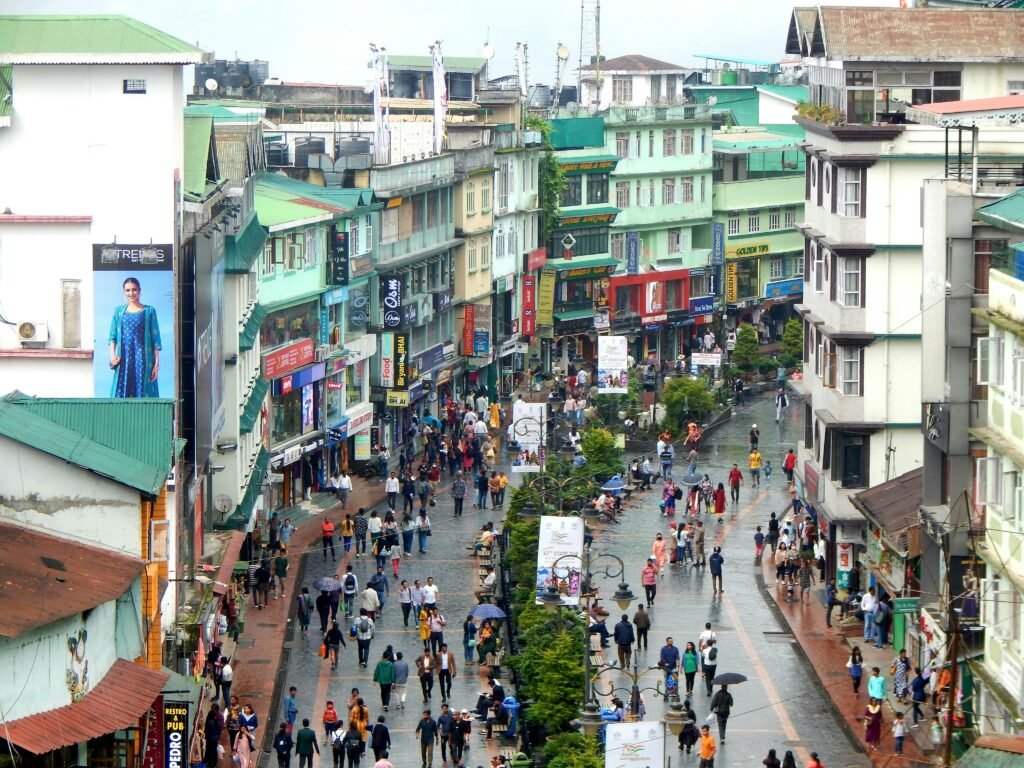
No guide to the city is complete without MG Marg Gangtok. Named after Mahatma Gandhi, this is the main promenade and social centre of the town, and it is a pedestrian zone. Vehicles are not allowed, and the street is known for being remarkably clean and litter-free.
What makes MG Marg special
- Walkable and car-free: You can stroll at your own pace without traffic noise.
- Cafés and restaurants: Expect a mix of Tibetan, Sikkimese, Nepali, Indian and continental options.
- Shopping: Handicrafts, woollens, Tibetan curios, prayer flags, local tea and souvenirs.
- Seating and viewing spots: Benches line the promenade, and on clear days you can see Kanchenjunga in the distance.
- Evenings and festivals: The area is lively after sunset, with music, events and festive decoration during holidays.
What to eat around MG Marg
Try momos, thukpa, gyathuk, sel roti, phagshapa, local tea and, if you like, regional drinks such as chhaang at suitable places. Many cafés also serve fresh baked goods and good coffee.
Tips for visiting MG Marg
- Visit twice if you can: once during the day for shopping and once in the evening for the atmosphere.
- Carry some cash for small shops, though UPI is widely accepted.
- Respect the clean-street culture and use dustbins.
- Hotels near MG Marg are convenient for walking, though prices are higher.
Top Gangtok Tourist Places
The list of Gangtok tourist places is long. We have grouped them into places within the city and places that need a day trip.
Tourist places within Gangtok
1. Enchey Monastery
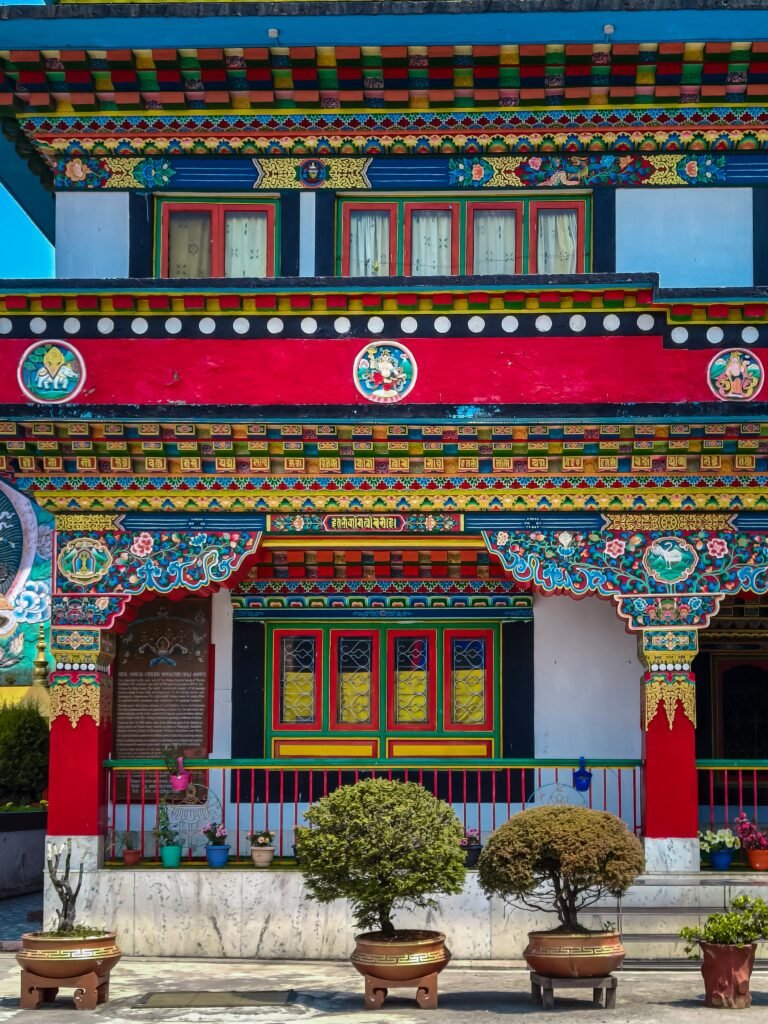
A small and peaceful Buddhist monastery on a ridge above the town, known for its colourful architecture and annual festivals.
2. Ganesh Tok and Hanuman Tok
Two temples on hilltops offering sweeping views of the town and the mountains. Both are quick, rewarding stops.
3. Tashi Viewpoint
A well-known spot for sunrise views over Kanchenjunga. Reach early for the best light.
4. Gangtok Ropeway
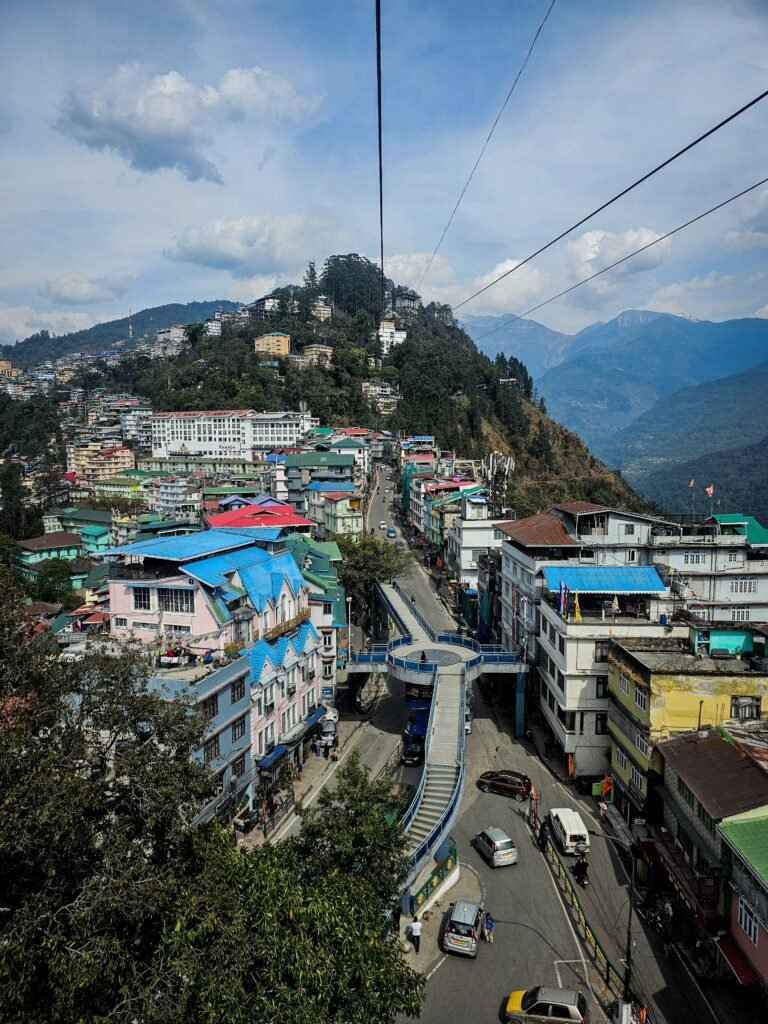
A cable car ride that gives a bird’s-eye view of the town, the valley and the surrounding hills.
5. Do Drul Chorten
One of the most important stupas in Sikkim, surrounded by prayer wheels you can spin as you walk.
6. Namgyal Institute of Tibetology
A museum and research centre with a collection of Buddhist art, rare manuscripts and artefacts.
7. Banjhakri Falls and Energy Park
A landscaped park built around a waterfall, with sculptures themed on local shamanic traditions. It is a good half-day stop for families.
8. Himalayan Zoological Park
A large park that works as a rescue and conservation space for animals native to the Himalayas, in a natural forest setting.
9. Flower Exhibition Centre
Best visited in spring, when orchids and seasonal blooms are on display.
10. Bakthang Waterfall
A quick roadside stop with a scenic waterfall, easy to combine with a drive.
Day trips from Gangtok
11. Tsomgo (Changu) Lake
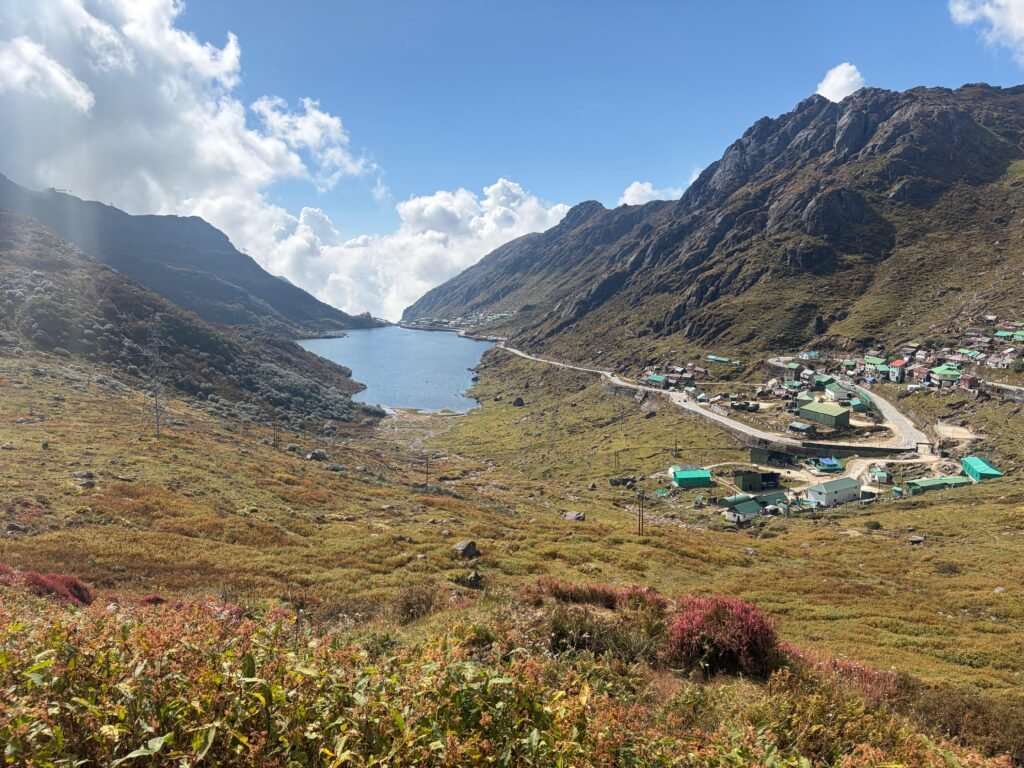
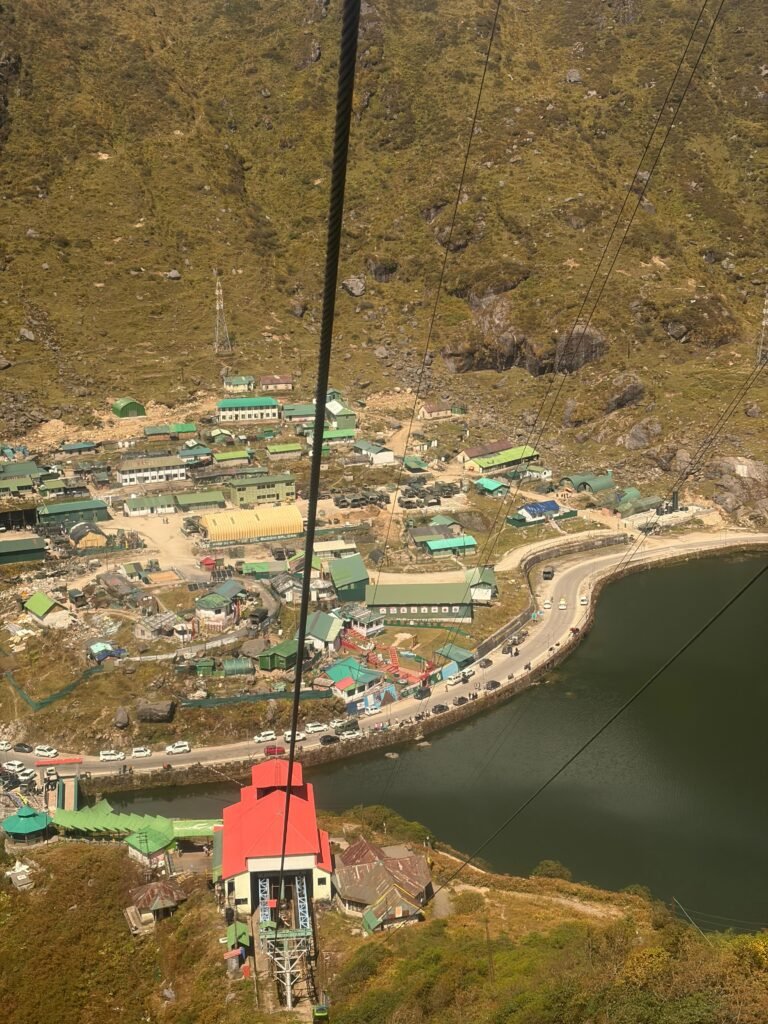
A glacial lake at a high altitude, around 38 km from Gangtok. It is stunning in every season and often snow-covered in winter. Permits are required.
12. Nathula Pass
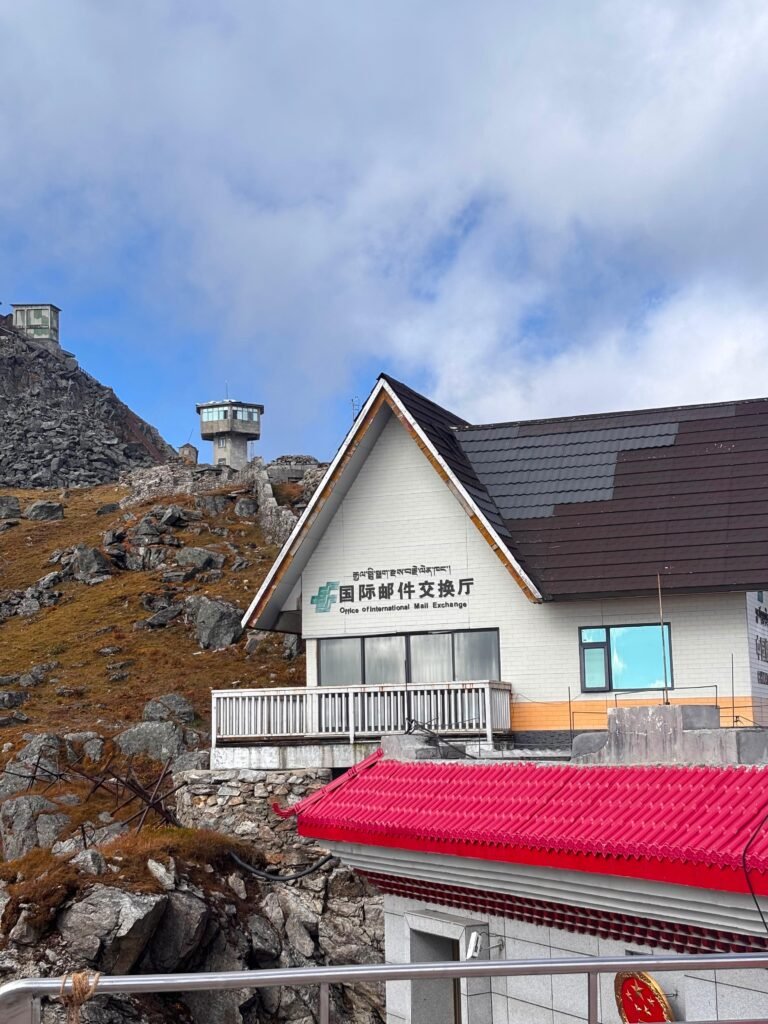
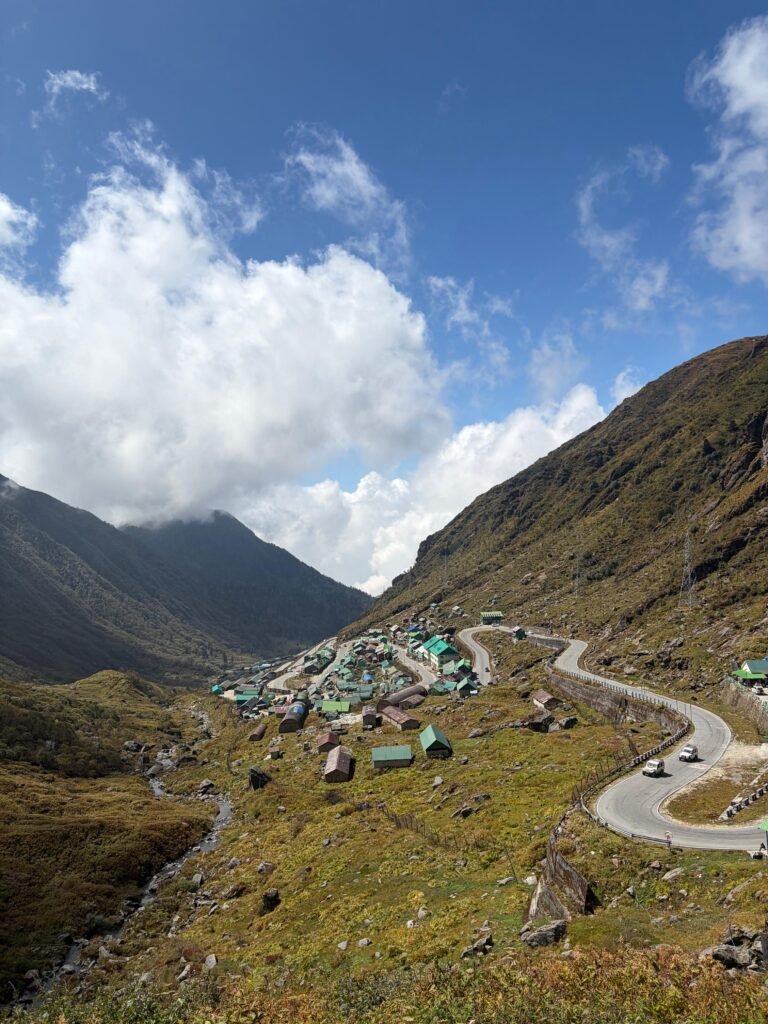
A mountain pass on the Indian–Chinese border, about 56 km from Gangtok. Visits are limited to Indian citizens, usually on specific days of the week, and require a permit. Check the current schedule before planning.
13. Baba Mandir
A shrine dedicated to a soldier, Baba Harbhajan Singh, on the road to Nathula, held in great respect by locals and the army.
14. Rumtek Monastery
One of the most significant monasteries in Sikkim, about 24 km from Gangtok, with striking architecture and a calm atmosphere.
15. Lingdum (Ranka) Monastery
A modern, beautifully designed monastery set in a green valley, a short drive from the city.
Gangtok Distance Guide: How Far Is It from Siliguri, Bagdogra, NJP and Darjeeling?
Distances are among the most searched questions for this destination. The figures below are approximate road distances and travel times under normal conditions.
| From | Approx. Distance | Approx. Travel Time |
|---|---|---|
| Siliguri to Gangtok | 114 km | 4 to 5 hours |
| Bagdogra to Gangtok | 124 km | 4 to 5 hours |
| NJP to Gangtok | 125 km | 4.5 to 5.5 hours |
| New Jalpaiguri to Gangtok | 125 km | 4.5 to 5.5 hours |
| Darjeeling to Gangtok | 95 to 100 km | 4 to 5 hours |
Travel time depends on weather, road works and traffic. During monsoon, allow extra time.
Siliguri to Gangtok distance
The Siliguri to Gangtok distance is roughly 114 km, mostly along the NH10 road that follows the Teesta River through Sevoke, Rangpo and Singtam. Shared taxis and buses to Gangtok leave from stands in Siliguri, and private cars are easy to book.
Bagdogra to Gangtok distance
The Bagdogra to Gangtok distance is around 124 km. Prepaid taxis and private cabs are available outside the airport, and shared cabs run on this route too. Most visitors fly into Bagdogra and are in Gangtok by the afternoon.
NJP to Gangtok distance
The NJP to Gangtok distance is approximately 125 km. NJP is the main railway station for the region, and taxis and shared jeeps wait outside. The drive is scenic once you clear the plains and enter the foothills.
New Jalpaiguri to Gangtok distance
For travellers who search for the New Jalpaiguri to Gangtok distance, it is the same as the NJP route: about 125 km, taking roughly 4.5 to 5.5 hours. You can pick up a cab directly from the station or travel via Siliguri.
Darjeeling to Gangtok distance
The Darjeeling to Gangtok distance is around 95 to 100 km by road, taking roughly four to five hours. The usual route runs down towards the Teesta valley and then climbs to Gangtok. It is a spectacular drive, and many travellers combine both destinations on one trip.
How to Reach Gangtok
By air
The nearest major airport is Bagdogra (IXB) in West Bengal, which has regular flights from major Indian cities. Sikkim also has Pakyong Airport, about 30 km from Gangtok, though flight availability can be limited and weather-dependent, so verify the schedule before relying on it.
By rail
Sikkim does not have a fully operational railway network at the time of writing. The nearest practical railhead is New Jalpaiguri (NJP) near Siliguri. A rail link towards Sikkim has been under construction for years, so check for the latest status.
By road
Gangtok is well connected by road with Siliguri, Darjeeling, Kalimpong and other towns. National Highway 10 is the main route. Shared taxis, private cabs and buses (including Sikkim Nationalised Transport) operate regularly.
Where to Stay in Gangtok
- Near MG Marg: Best for convenience, nightlife and shopping. Prices are higher.
- Tadong and Development Area: Quieter surroundings and often better value.
- Homestays: Increasingly popular, with home-cooked Sikkimese food and a warm local welcome.
- Budget hotels and lodges: Plenty of options for backpackers and families.
Booking tips: In peak season (March to May and October to December), book early. Ask about heating in winter and about parking if you travel in your own car.
Permits and Practical Tips
- Permits: Tsomgo Lake and Nathula require permits, which tour operators and taxi unions usually arrange. Carry valid photo ID.
- Nathula days: Nathula is not open every day and can close due to weather, so confirm before you go.
- Altitude: Higher destinations can cause breathlessness or headaches. Go slowly, drink water and rest.
- Cash and connectivity: ATMs are available in town. Mobile networks work well in the city but can be patchy on mountain roads.
- Local etiquette: Dress modestly at monasteries, remove shoes where required and ask before photographing people.
- Waste: Sikkim takes cleanliness seriously. Avoid littering and single-use plastic.
Sample 3-Day Gangtok Itinerary
Day 1 – Arrival and local sightseeing
Arrive from Siliguri, Bagdogra or NJP. Check in, visit Ganesh Tok, then explore MG Marg in the evening.
Day 2 – Tsomgo Lake and Nathula (permit dependent)
Early start for Tsomgo Lake, Baba Mandir and Nathula if open. Return to Gangtok by evening.
Day 3 – Monasteries and local attractions
Visit Rumtek Monastery, Enchey Monastery, Do Drul Chorten and the ropeway. Depart in the afternoon or continue to Darjeeling.
If you have more time, add a day for Lingdum Monastery, the zoological park and Banjhakri Falls, or extend into North Sikkim.
Combining Gangtok with Darjeeling and the Hills
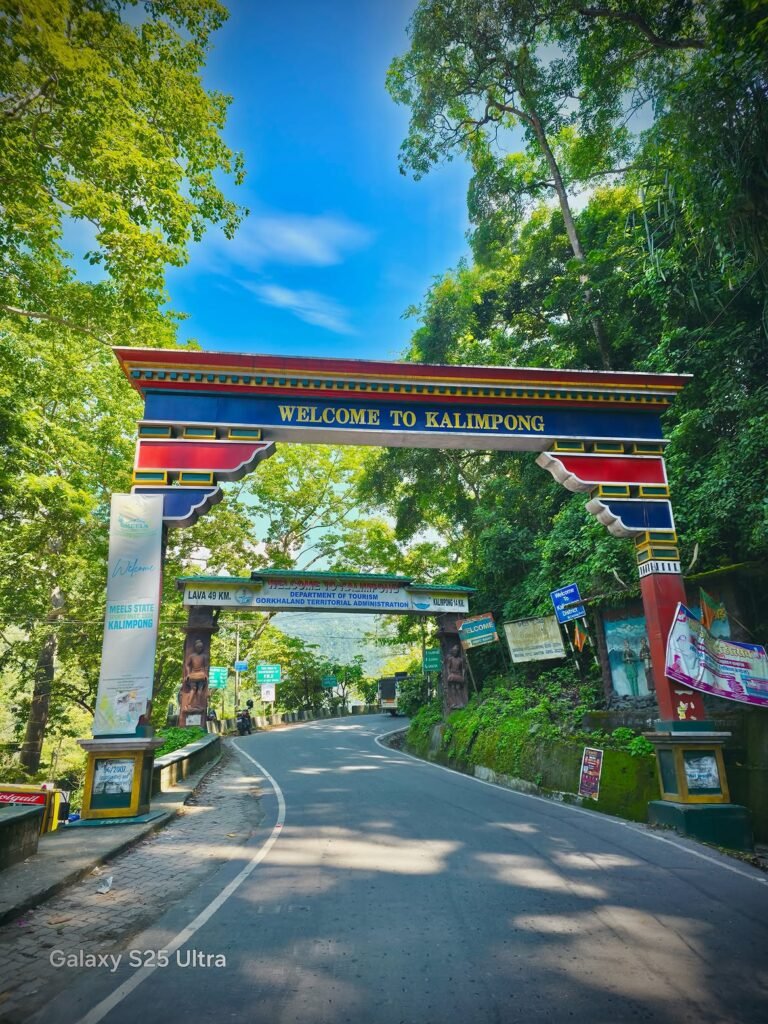
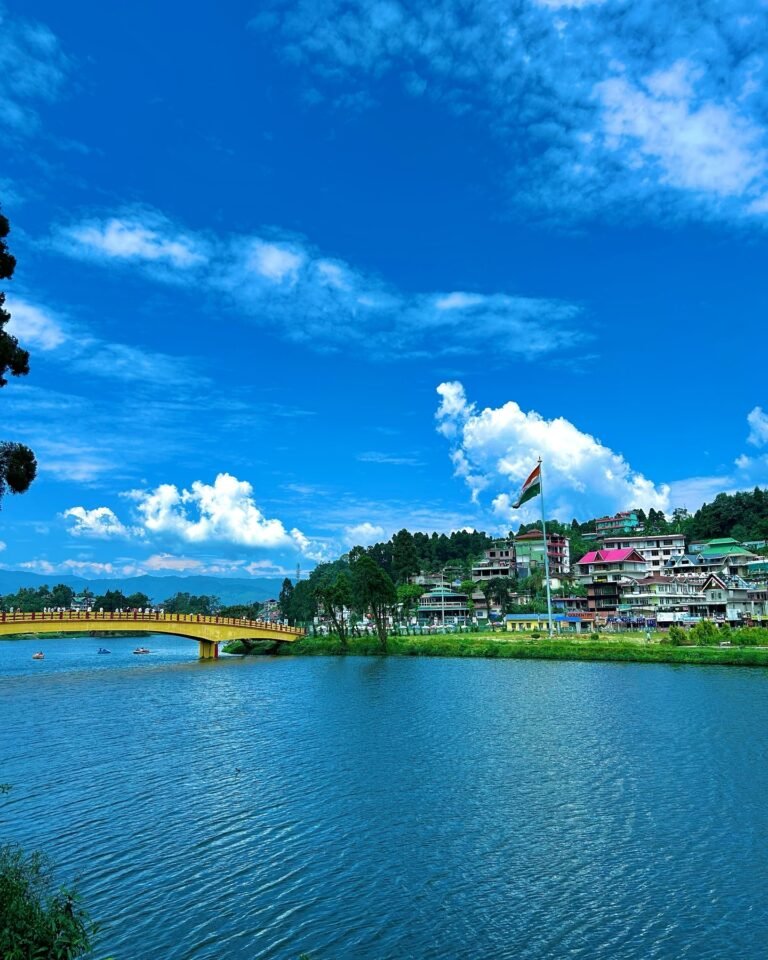
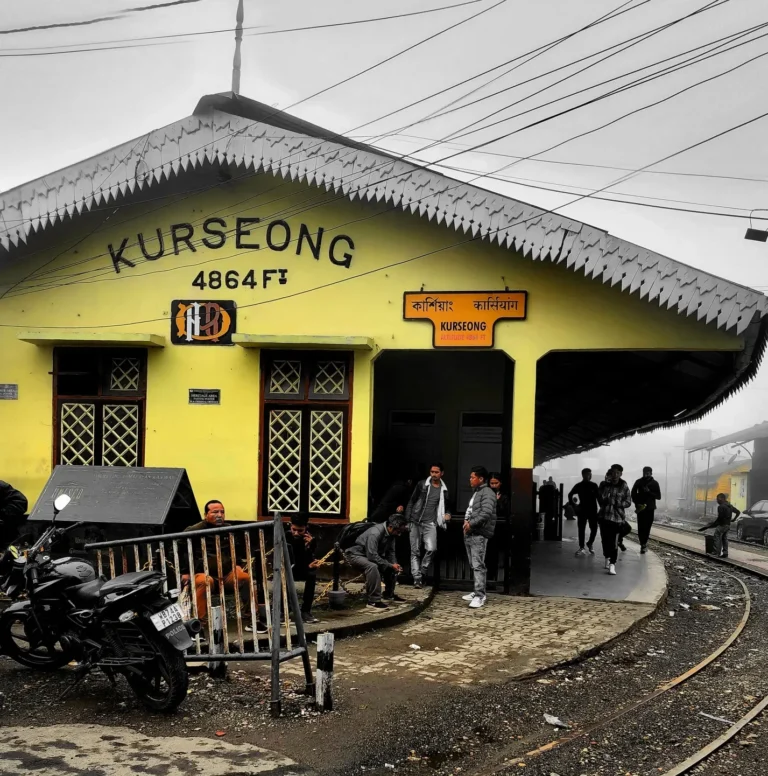
Gangtok pairs naturally with the rest of the Darjeeling Hills. A popular circuit runs from Siliguri to Gangtok, then Darjeeling, then Kalimpong and back, or in reverse. Because the Darjeeling to Gangtok distance is under 100 km, you can easily cover both in a week, adding offbeat stops such as Mirik, Kurseong or Sittong.
Frequently Asked Questions
1. What is the best time to visit Gangtok?
March to May and October to mid-December offer the clearest views and the most comfortable weather.
2. How cold does Gangtok get?
In winter, night temperatures can drop close to 4°C, and higher areas nearby get snow.
3. What is MG Marg Gangtok famous for?
It is a clean, car-free promenade lined with cafés, shops and viewpoints, and it is the social heart of the city.
4. What is the Siliguri to Gangtok distance?
Roughly 114 km, taking about four to five hours by road.
5. What is the Bagdogra to Gangtok distance?
About 124 km, around four to five hours by road.
6. What is the NJP to Gangtok distance?
About 125 km. The New Jalpaiguri to Gangtok distance is the same.
7. What is the Darjeeling to Gangtok distance?
Approximately 95 to 100 km, taking four to five hours.
8. Do I need a permit for Tsomgo Lake and Nathula?
Yes. Permits are required, and Nathula is open only to Indian citizens on certain days.
Conclusion
Gangtok is a rare destination: orderly, scenic and rich in culture, yet easy to reach from Siliguri, Bagdogra or NJP. Whether you come for Gangtok weather that stays cool when the plains are hot, an evening on MG Marg, or the long list of Gangtok tourist places, it delivers on every front. Plan around the season, arrange your permits early, and give yourself at least three days.
Planning your wider Himalayan trip? Explore our other guides to Darjeeling, Kalimpong, Mirik, Kurseong and Sittong on DarjeelingTrip.com.